Claire's and TOFS: when “value retail” is a symptom not a strategy
- William Beresford
- Jan 6
- 4 min read

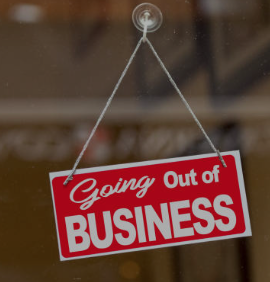
The news that Claire’s and The Original Factory Shop (TOFS) are heading into administration is bleak and not just for the 2,500+ people whose livelihoods are suddenly in limbo. It’s bleak because these aren’t fringe players. They’re recognisable, widely distributed, “should-be-resilient” high-street names. If they can’t make the economics work after Christmas trading, it tells you something uncomfortable about the retail operating model in 2026.
It’s tempting (and lazy) to treat this as another morality tale about “not going digital fast enough”. Most retailers reading that line will rightly roll their eyes. You’re already investing. You’ve already modernised parts of the stack. You’ve already built apps, launched marketplaces, improved delivery, squeezed suppliers, renegotiated rents, re-merchandised ranges. You don’t need someone to explain omnichannel strategy to you like it’s 2014.
The harder truth is more operational: the environment now punishes any business that can’t sense demand shifts early, translate them into decisions quickly, and execute them reliably across channels while cost and working-capital pressures are rising at the same time. Today retail is facing a decision system issue.
The retail challenge isn’t digital. It’s physics.
Retail has always been a margin game but the “physics” have now changed:
Demand is more volatile and less loyal. Switching costs are low, discovery is algorithmic, and value perception resets weekly.
Cost pressures are stubborn. Labour, energy, fulfilment, shrink, rent, and returns don’t politely wait for your transformation roadmap to finish.
The middle is being hollowed out. Premium plays win on differentiation; discounters win on operational excellence. Everyone else is fighting over increasingly thin air.
And online is still taking share in a relentless compounding way. Forrester is projecting UK e-commerce rising to 32% by 2029 which is an enormous structural pull on footfall-based models.
You can already see why this bites brands like Claire’s particularly hard: teen and pre-teen discovery has moved platform-native; trend cycles are brutal; and the store is no longer the default place to browse low-ticket accessories. Meanwhile, TOFS sits in the value end of the market but “value” isn’t automatically profitable when your cost-to-serve is wrong, your buying isn’t sharp enough, or your stock/space decisions lag reality.
The adverse landscape is forcing a new kind of innovation
When people say “innovation” in retail, they often mean theatre: a shiny app feature, a new store concept, a loyalty refresh. Useful, sometimes, but oftentimes insufficient.
The innovation that matters now is operational innovation: shortening the distance between (1) what customers are doing and (2) what the business decides and delivers.
That’s why the most important transformation work isn’t “more data” or “more AI”. It’s changing how decisions get made, which is exactly where most programmes quietly stall. At Beyond, our core belief is simple: if you don’t redesign decision-making, data and AI investment becomes expensive décor.
And yes, this is where AI becomes existential rather than interesting. Forrester expects global tech spend to reach $4.9T this year driven in large part by software, cloud, and AI-enabled modernisation. Yet Forrester has also highlighted how growth has slowed for many retailers — in one widely referenced analysis, average YoY growth across a tracked set of retailers was just 3.3% (for 2024), pushing leaders to look for margin expansion through new models (marketplaces, retail media, etc.). That’s a symptom of the same underlying reality: if topline growth is harder, decision quality becomes your primary growth engine.
Why “digital transformation” becomes survival transformation
Retail leaders need leverage:
Leverage in pricing and promotions (less guesswork, faster learning cycles)
Leverage in ranging and space (localised truths, not averaged myths)
Leverage in supply and inventory (fewer “hero bets,” more adaptive flow)
Leverage in customer experience (personalisation that pays for itself, not personalisation as a vanity project)
A Beyond framework: Agility and AI readiness in five moves
Here’s the framework we use at Beyond to turn “be more agile” into an operating system. It’s designed for leaders who already know retail is hard and want an approach that respects that.
1) Decide what decisions matter (and who owns them)
Start with a brutally short list of value decisions: the recurring decisions that move margin and cash.
Examples:
“Which 50 SKUs are we overstocked on by store cluster, and what’s the fastest profitable exit?”
“Which promotions are driving sales vs. pulling forward demand?”
“Which customers are at risk this month, and what’s the lowest-cost intervention that works?”
This aligns with our “decisions, not dashboards” approach: clarity first
2) Build a single, trusted commercial truth (not a perfect data lake)
Most retail teams don’t suffer from lack of data. They suffer from competing versions of truth: trade vs. ecommerce vs. finance vs. supply chain.
AI readiness begins with data readiness but practically, that means: reliable, governed datasets tied directly to your value decisions. Beyond’s AI + Data Readiness work is explicitly end-to-end: collecting, processing, and making data usable for action, not archiving.
3) Create an “agility loop”: Sense → Decide → Act → Learn
This is where retailers win or lose the next decade.
Sense: near-real-time signals (sell-through, searches, returns, social, competitor price moves, local events)
Decide: clear decision rights + commercial logic (with test-and-learn baked in)
Act: execution across channels (pricing, content, allocation, fulfilment, comms)
Learn: rapid measurement that feeds the next cycle (not post-mortems three weeks later)
If you can’t complete this loop quickly, you’re effectively trading with yesterday’s map.
4) Deploy AI where it closes cycle time
AI that matters is AI that removes latency from the loop:
Forecasting and replenishment that adapt to micro-shifts
Promotion optimisation that separates incrementality from noise
Customer messaging that is constrained by margin, not just CTR
Service automation that reduces cost while protecting loyalty
The trap is using genAI as a layer of content sugar on top of broken decision plumbing.
5) Operationalise: machine learning, governance, and frontline adoption
Readiness includes:
A delivery path (monitoring, retraining cadence)
Governance (privacy, bias, controls especially in pricing and targeting)
Adoption (store ops, contact centre, trading teams - the people who actually execute outcomes)
The uncomfortable conclusion
Claire’s and TOFS aren’t collapsing because retail leaders don’t understand retail. They’re collapsing because the tolerance for slow decision-making has evaporated and the cost base no longer forgives it. The winners over the next three years won’t be the retailers with the most “digital stuff”. They’ll be the ones who treat data, AI, and operating model as one integrated system designed to make better decisions, faster, with less friction. The reality is that this is the only way the numbers work.